OCTOBER 2012 Shows

MEXICO CITY FALL 2012

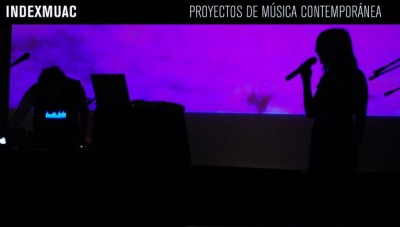
October 16, 2012, 19:00 

2º Festival Internatcional Cerro de Arena
El Centro Cultural Universitario Tlatelolco, UNAM

Set One: Burkhard Beins / Liz Albee duo
Set Two: Andrea Neumann / Bonnie Jones

October 21, 2012, 20:00 

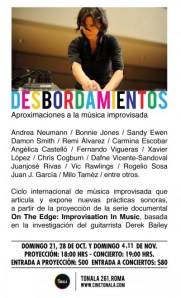
Desbordamientos Series
Cine Tonalá: Tonalá 231, Col. Roma (Entre Aguascalientes y Tlaxcala), México, D.F.

Co-curated with Fernando Vigueras: Desbordamientos features improvisors from around the world accompanied by a viewing of Derek Bailey’s seminal four-hour documentary “On The Edge: Improvisation In Music”.

First Edition – Sunday, October 21, 2012:
1: Carmina Escobar (México)
2: Andrea Neumann + Bonnie Jones (Germany + USA)
3: Angélica Castelló (Austria)

October 22, 2012, 17:00

Master class: Música electrónica, performance y texto
Bonnie Jones (EUA)

Fecha: 22 de octubre
Horario: 17:00 hrs.
Foro La Morada

October 27, 2012, 20:00

Dafne Vicente-Sandoval (Paris)
Angelica Castelló (Vienna)
Hanna Hartman  (Berlin)
Bonnie Jones (Baltimore)

Concierto música experimental
Universidad Nacional Autónoma de México (UNAM)
Museo Universitario Arte Contemporáneo

SEPTEMBER 2012 Shows

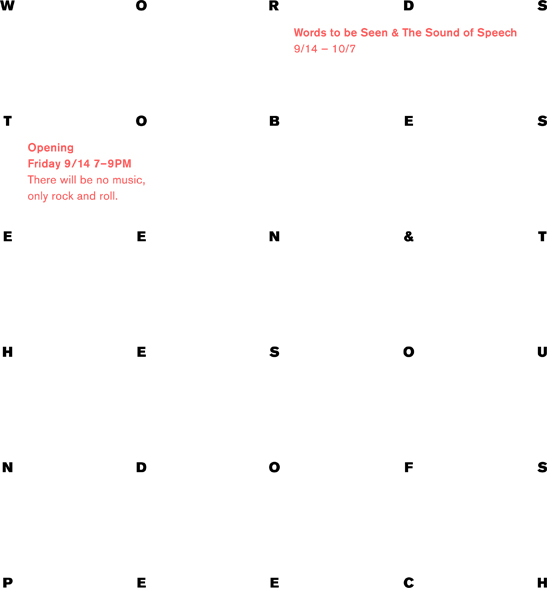
WORDS TO BE SEEN & THE SOUND OF SPEECH
9/14–10/7
Opening, Friday, 9/14, 7pm – 9pm 

Reverse Space
Williamsburg, 28 Frost Street
Brooklyn, NY 11211

A group show of visual work, installation and sound performance focused on text and speech as distinct from their everyday communicative functions. Featuring the work of FAMED, Nathan Gwynne, Bonnie Jones, nicoykatiushka (NyK), David Schoerner, Andrea Wolf, and Audea Wolowiec.

Words to be Seen & The Sound of Speech seeks to flesh out the contradictions that exist between words and images, and thus between description and representation. By emphasizing new and experimental approaches of expression within a curated setting, Words to be Seen & The Sound of Speech promotes the gallery’s mission of providing an alternative space that fosters innovation and exploration. The artworks included represent a contemporary take on the use of text in multiple mediums, exhibiting the aesthetic properties within them. Some works portray the rhythmic translation of speech as visual or sound installations. Others use words themselves as visual cues thereby expanding and confounding the boundaries that lie between art, speech and text.

Accompanying these visual works and installations will be a series of sound performances, scheduled throughout the exhibition, entitled The Sound of Speech. This performance series will focus on highlighting the sonant qualities of speaking. A group of sound artists and musicians will interpret the works exhibited in the gallery as well as perform some of their own contemporary sound pieces. They will also enact an interpretation of past speech scores selected by sound artist, Maria Chavez.

These works remind us that language is a fragile and illogical construct, loosely bound to reality by cultural convention. By exploring the latent potential of language and the systems we use to communicate, Words to be Seen & The Sound of Speech aims to separate the message of text and speech and highlight the fascinating nuances that are hidden by their everyday uses.

——————————————————————————————————————————

A 12 Hour performance
with Stephanie Barber & Bonnie Jones
9/22, Noon to Midnight
http://reversespace.org/?p=180

A New Collaboration in Translation and Aliveness

As part of the exhibition Words to be Seen & the Sound of Speech, filmmaker / writer Stephanie Barber and musician / writer Bonnie Jones will present a “a new collaboration in translation and aliveness” a 12-hour long improvised text and sound performance from Noon to Midnight on Saturday, September 22nd, 2012.

“Translation is entirely mysterious. Increasingly I have felt that the art of writing is itself translating, or more like translating than it is like anything else. What is the other text, the original? I have no answer. I suppose it is the source, the deep sea where ideas swim, and one catches them in nets of words and swings them shining into the boat…where in this metaphor they die and get canned and eaten in sandwiches.” – Ursula K. Le Guin

Video Excerpt, AS220
Bonnie Jones and Stephanie Barber Text Improvisation

——————————————————————————————————————————

Friday, September 28, 2012
7:30pm, FREE

MATÉ_series / number 2
The Invisible Dog
51 Bergen Street, Brooklyn, New York 11201


https://www.facebook.com/events/155766664547799/
http://www.theinvisibledog.org/mate_series-2/

PROGRAM

Set 1: C. Spencer Yeh / 8:00pm — sharp
Set 2: Samita Sinha and Bonnie Jones / 8:35pm – sharp

15’ intermission

Set 3: David Moscovich / 9:20pm – sharp
Set 4: Stephanie Loveless / 9:55pm – sharp

MATE is a series, curated and organized by Richard Garet, dedicated to sound and moving image presentations that are derived from ideas, processes, material, and media experimentation. This series attempts to present from within a large spectrum of today’s experimentalists, the work of artists that are vigorously contributing to our cultural landscape. These sound and moving image performances can be expected to range from algorithmic media and technology oriented gizmos to the wide range of analog media while engaging in approaches such as improvisation, composition, performance-installation, and interdisciplinary methods and techniques that expand on both artistic practice and audience reception. Each evening will be be orchestrated around a specific focus.

“by the time” Commissioned for London ICA “Soundworks”

Soundworks
19 June 2012 – 16 September 2012

“by the time” by Bonnie Jones (electronics, voice, field recordings)

London Institute of Contemporary Arts
The Mall, London SW1Y 5AH
http://www.ica.org.uk/soundworks

As part of our season on sound, this exhibition presents one hundred new sound commissions produced by artists from all over the world. Selected by our curators and art institutions worldwide, the artists have been invited to submit a sound file, taking its stimulus from the themes evoked in Bruce Nauman’s Days, which will be presented in the lower gallery during the exhibition.

Soundworks embraces the ephemeral nature of sound, creating an online platform that doubles as a virtual exhibition space. The online presentation aims to make the works internationally accessible, a site to explore the genre as a medium which is simultaneously inclusive, interactive, and subversive.The exhibition includes a wide range of audible approaches by artists who have been working with the medium for many years, as well as artists taking their first venture into the sonic arts.

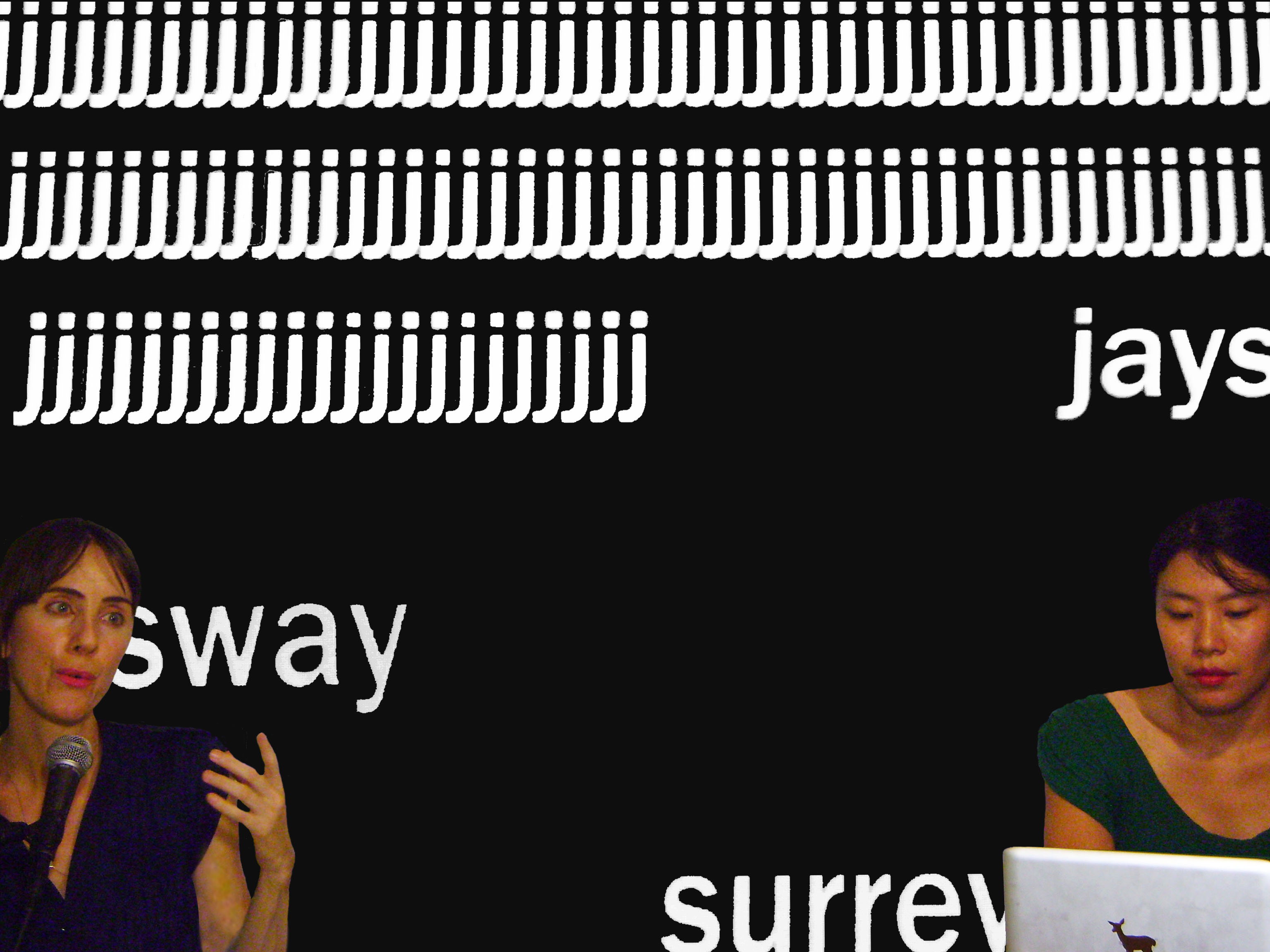
“Notes on Sound”, text video published online Continent Journal

A recent text video work titled “Notes on Sound” in the latest edition of Continent Journal. http://continentcontinent.cc/index.php/continent/article/viewArticle/95

Notes on Notes on Sound, July 18, 8:34pm Isaac Linder

Paul de Man begins his landmark text, Allegories of Reading, with a cheeky epigraph from the philosopher Blaise Pascal. It reads, ‘Quand on lit trop vite ou trop doucement on n’entend rien’ (When you read too quickly or too slowly you hear nothing). The epigraph is cheeky because in the course of de Man’s work he avoids elucidating at what speed one would one would be able to properly hear the texts to which they are attending. For de Man the force of literary tropes—the way they seduce and structure their multiple readings—relies on the intimate proximity of figures and properties in the relational linkages of a text. Textual spatialization trumps and belies the importance of the tempo and temporality.

Enter the “site”-specific text videos by the Korean-American writer and improvising musician, Bonnie Jones. In these works, unique to the venues that have solicited them, the time of writing is captured and stored in a complex digital apparatus in the first instance, along with all of the hesitations, repetitions, and sudden keystrokes attending its production. Speed is pro-scribed— written in advance—and the time (five minutes and sixteen seconds) of Notes on Sound is spatialized into an affective mesh that ensnares the viewer in a doppler effect created between the speed of writing and the speed of reading. We’re caught in the tempo of Jones’ decisions (that is, unless we fast forward, pause, or rewind the text; unless it freezes or takes too long to load). We find ourselves subvocalizing along to a deceptively simple prompt (“please now together count back from one hundred”) as the phonetic units that comprise the video permute into polyphony and warp like the minimalist pixelations of a concrete poem into the grammar of the Notes (that is, unless we are reading along out loud). We are forced to feel our form of reading as it unfolds, in a manner arguably more proliferate and protocolized than would have been known in Pascal’s time. Would he have been able to hear anything?

With its understated use of syntax and short-circuiting Notes on Sound is without a soundtrack, but by no means silent: Meditation on counting, on the sound of counting, and what counts as sounding; on the way we count on sound as a pre-text for things to ring true, as they do in the famously less calculable arenas of, say, emotion and poetry. Notes on Sound is a record of these. If I become more emotional about this it is only because it forces us to hear her.